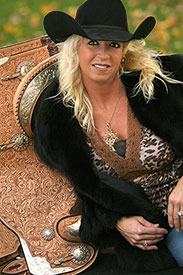
 Tina Langness was born in Ames, Iowa. She began riding at a young age showing at 4-H, open and breed shows as well as galloping race horses and participating in high school rodeo. She graduated from college with a degree in nursing and at that time trained horses on a part-time basis. In 2001 she established Tina Langness Performance Horses and now resides in New Richmond, Wisconsin where she operates a full-spectrum training facility. Her primary focus is showing Paints, but continues interest in the Thoroughbred racing, Quarter Horse and hunter industries.
Tina Langness is a World Champion Exhibitor, Trainer and Coach. Tina’s accolades include over 75 APHA, PtHA, ApHC and NSBA World and Reserve World Champions. Tina has been coined a “Top Trainer” and specializes in coaching all-around youth and amateur competitors.
Tina is a Certified Judge, Markel APHA Professional Horseman, a U.S. and International Clinician as well as a Registered Nurse.
She is also affiliated with many equine associations including APHA, AQHA, PtHA, ApHC, PBHA, NSBA, IHSA, POAC, WSCA, IPHC, WDAA, MPHA, ARHA, WHC, 4-H and FFA.
Tina resides on the Board of the Iowa Pinto Horse Association and is a WSCA Judge’s Code of Ethics and Animal Welfare Committee member.
She is also a member of the American Nurses Association.
Tina is active in her community volunteering her time as a clinician to local 4-H, FFA, Open, and Breed clubs, and is a statewide and national contributor for educational community articles.
She also dedicates her time to community nursing and consultation to battered woman’s homeless shelters, the Salvation Army, and events needing on-site licensed professional observation and emergency care.
She has been featured and published in such publications as the American Paint Horse Journal, The Equine Chronicle, In Stride Edition, Equestrian Style Magazine, Paint Horse Connection, The Country Today, Horse Power, Hunt Seat Horses.Com, New Richmond News, The Judge’s Choice, The Midwest Stallion Directory, The Cornerstone Blog, and HorseShowJudges.com. She has also been featured on the Discovery Channel’s Animal Planet.
Over the years Tina Langness and her clients have walked away with top awards from around the country in a long list of events. Tina and her clients compete at shows in many events from western pleasure, hunter under saddle, pleasure driving, and trail.
What makes for success
First and foremost you must love what you do. To make any business successful you must possess a work ethic that is superior to anything else you’ve ever done in life. No matter what the business, you will always find similar characteristics of a successful person ~ a deep desire and true passion for what you do, the desire to excel, open-mindedness, a intense need to learn and be “better,” realizing limitations and the ability to focus on what you are best at.
Some trainers can possess all these characteristics, however two key factors are missing. One is having good business sense and the second is people skills and the ability to surround yourself with the type of clients who will assist in creating a positive environment.
Encouraging success
I encourage my clients to be involved with their horses right down to the very basics. It’s important for the horse and rider to bond, and the more time they can spend together the better. I have established routines for my clients they have become comfortable with, they all know the expectations at the shows, how and when we practice, the importance of getting a good night’s sleep, and eating regular meals when they can. I encourage a nurturing atmosphere where we all pitch in and help one another!
train the whole team
With multiple clients, group dynamics is a key issue and can be a problem. If you have one person in the group who refuses to engage with others, feels they are superior, enjoys conversation about people in the group, or lacks motivation where other’s have to pull the load, it may be time for the client to go elsewhere. When developing my business plan it was important for me to treat each client on a holistic level. Meaning I wanted to focus on the biological, psychological, socioeconomic and spiritual needs of each person. Using this approach (which was learned from my nursing background) has enabled me to maintain long, respectful and purposeful relationships!
A Few golden rules
Tina's rules: praise and use honest appreciation, learn to criticize without creating a sense of failure, be sympathetic with other’s ideas and desires, try to put yourself in your client’s shoes, making your clients feel important, and to always be a good listener.













.png)
